How to make a bilingual website: two languages, one switch
A bilingual website should have one address per language (like / for English and /pl for Polish), a small
language switch in the header that links each page to its other version, and hreflang tags so Google shows people the
version in their language. Don't translate on the fly with a script, and don't redirect people by their browser
language. Below: why each of those matters, in Google's own words, and a real English–Polish website for a cleaning
company, built from one message in 134 seconds on Ginta's free plan.
Google's guidance quoted here was checked on 29 October 2026 and is linked. Ginta is our product.
The four rules that make a bilingual website work
1. One address per language. Google advises "using different URLs for each language version of a page rather than
using cookies or browser settings", and it usually crawls from the USA without a language preference, so a page that
changes language by itself may only ever be seen in one language
(Managing multilingual sites).
example.com/ and example.com/pl is the simplest way.
2. A switch people can see, on every page. A small "EN | PL" in the header, linking each page to the same page in the other language (not to the other home page). Name each language in its own language: "Polski", not "Polish".
3. No automatic redirects. Google says to avoid "automatically redirecting" people by language: someone on a holiday laptop, or a Polish speaker who wants to send the English page to a landlord, should get the page they clicked.
4. hreflang tags. A few lines in each page's head that tell Google "this page also exists in Polish, here". Each
version must list itself and every other version, or Google ignores the tags; x-default marks the page for everyone
else (hreflang). Google works
out a page's language from its words, not from the lang attribute, so each version has to be really translated.
And one human rule: write each language, don't machine-translate it word for word. Prices, phone numbers and opening hours must match; the sentences should sound like a native speaker wrote them.
A real example: a cleaning company in west London, in English and Polish
Czysto Cleaning is made up for this post. The website, timings and credits are real, from 29 October 2026: czysto-cleaning.ginta.page and its Polish version at czysto-cleaning.ginta.page/pl.
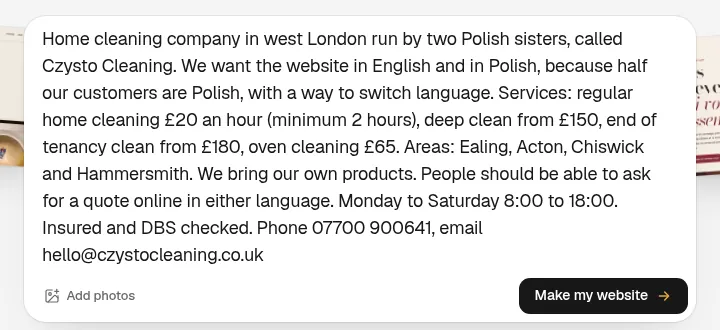
What I typed
What came out, 134 seconds later
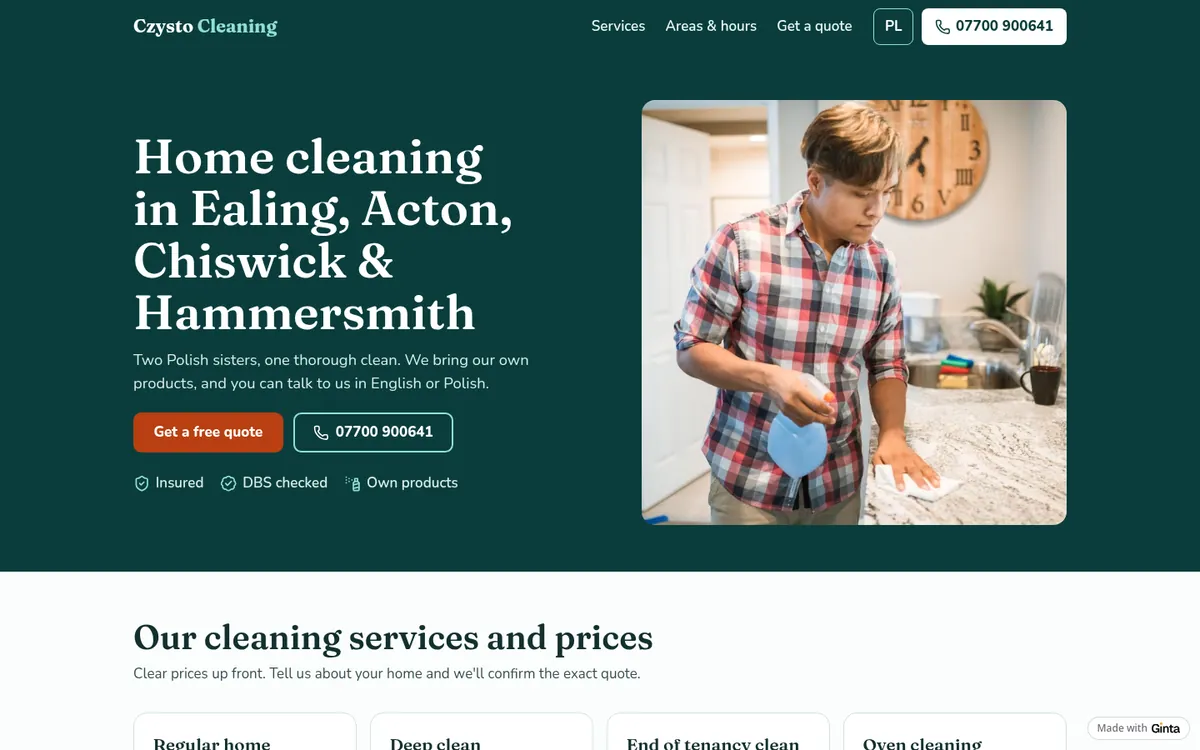
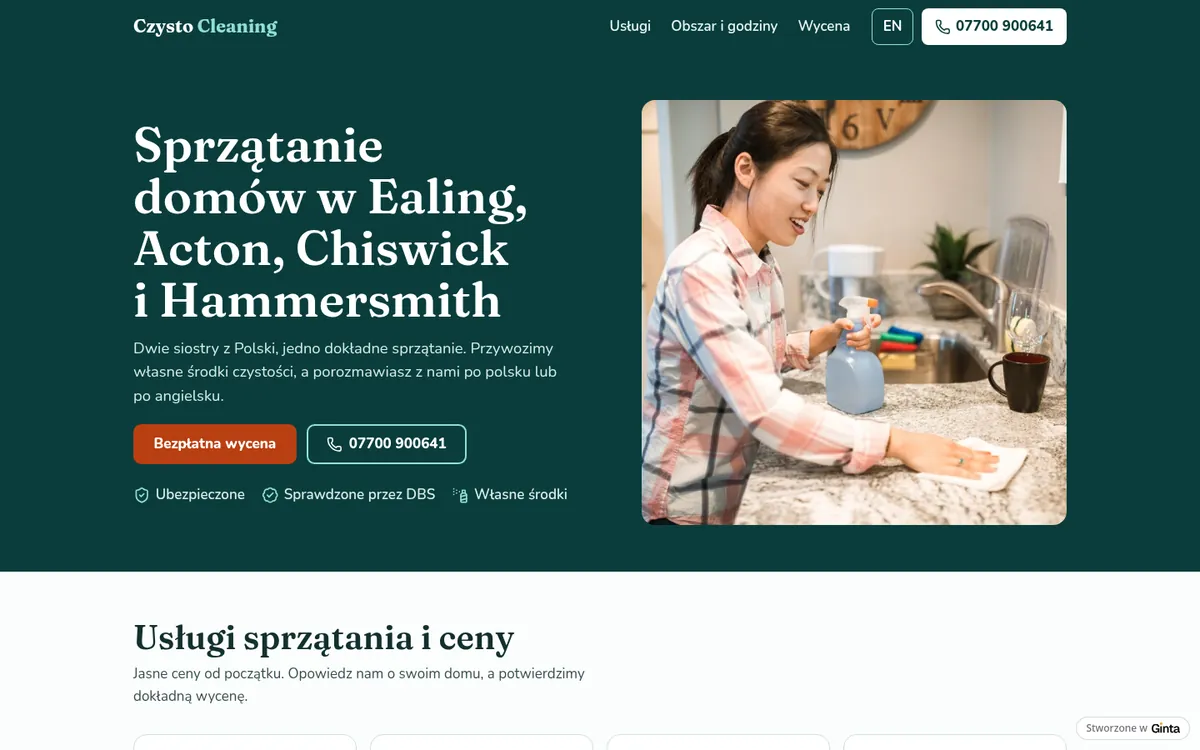
Both languages were live 134 seconds after I pressed the button, using 23.9 credits: more than a one-language site (our one-language examples used 10 to 21), because Ginta writes every page twice. It asked no questions.
What Ginta set up, checked in the page source:
- Two addresses:
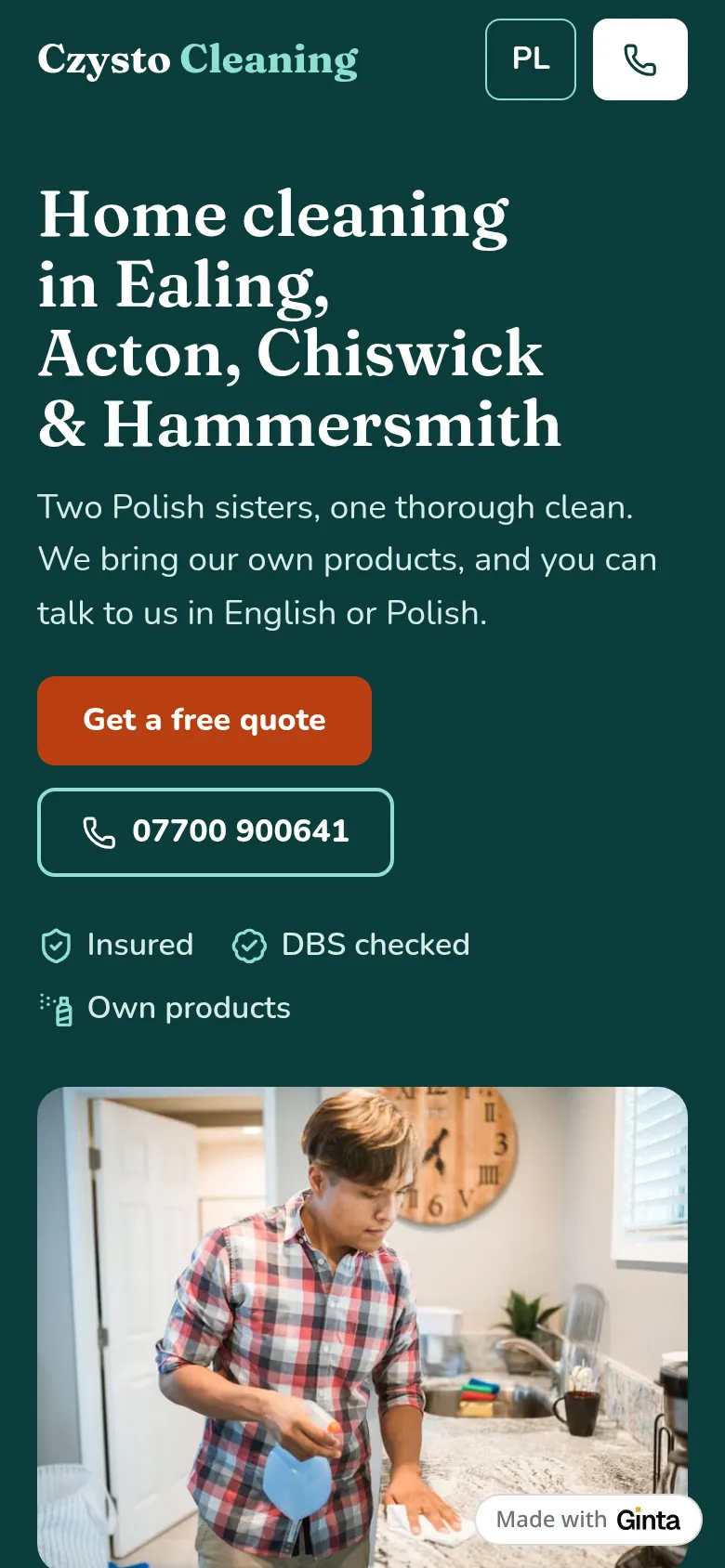
/(English) and/pl(Polish), each with<html lang>set. - A switch in the header on both, "PL" on the English page and "EN" on the Polish one, each linking to the other version of the same page. It stays visible on a phone.
- hreflang both ways: each page lists
en,plandx-default, so the tags pair up. - Both languages written, not word-for-word: the Polish page says "Dwie siostry z Polski, jedno dokładne sprzątanie" where the English says "Two Polish sisters, one thorough clean."
- A quote form on each page, in that page's language. Messages from both land in the same inbox.
- The small "Made with Ginta" badge in the page's language ("Stworzone w Ginta" on the Polish page).
What I'd check before sharing it
- A native speaker reads the second language. Ginta writes it well, but you know your customers' words.
- Photos. The English page shows a stock photo of a man cleaning; the business is two sisters. Send your own.
- The same facts in both. Change a price in one language and ask Ginta to change it in the other too, or keep prices in a Part (booking, menu, shop), which shows the same price in every language.
Already have a site in one language?
Ask in the chat: "add a Polish version of every page, with a language switch in the header". Ginta adds the second language as its own pages with the switch and the hreflang tags. If a page ends up without a switch, Ginta adds a small one by itself when it serves the page.
What it costs
Two languages used 23.9 credits here. Every new account gets 25 free credits when it confirms its email,
plus 5 a day; the Free plan includes 20 websites at a name.ginta.page address with a small
badge. Your own domain starts at €5 a month (with your own Claude or ChatGPT) or €19 on
Light. See pricing.
Questions
Is it better to have two websites or one bilingual website?
One website with a page per language, linked with hreflang. Two separate websites split your reviews, links and effort, and Google sees them as unrelated.
Should I use a subdomain, a folder or a different domain for the second language?
For a small business, a folder (/pl) on the same address is the simplest, and it's what Ginta does. Google treats all
three as valid; a separate country domain makes sense when you run separate businesses per country.
Can I use Google Translate on my website instead?
An automatic translation widget changes the words in the browser; Google Search doesn't see a second language, and customers notice the mistakes. Write the second language once.
Can Ginta build a website in more than two languages?
Yes: name the languages in your message. Each one gets its own pages and a place in the switch.
Which languages does Ginta write?
Any language you ask for. Ginta's own editor and help are in English, Lithuanian, German, French, Spanish and Polish.
Written with AI help for Ginta, which Povilas runs; he also teaches a website-building course. The screenshots are from the real Ginta on the date above, and prices come from our pricing page.